
Valedictorian Willemijn Eijsink (Class of ‘26) on building bridges with words: “You join a long line of people who stood up for something they believe in”
Willemijn Eijsink graduated from AUC as a Sciences major with a focus on chemistry, but her path is typically AUC and marked by a variety of disciplines. We sat down with her to talk about chairing the AUC Student Council, the protests that shaped her cohort, and why she is trading the lab for a gap year, starting with a volunteer camp in Ukraine.
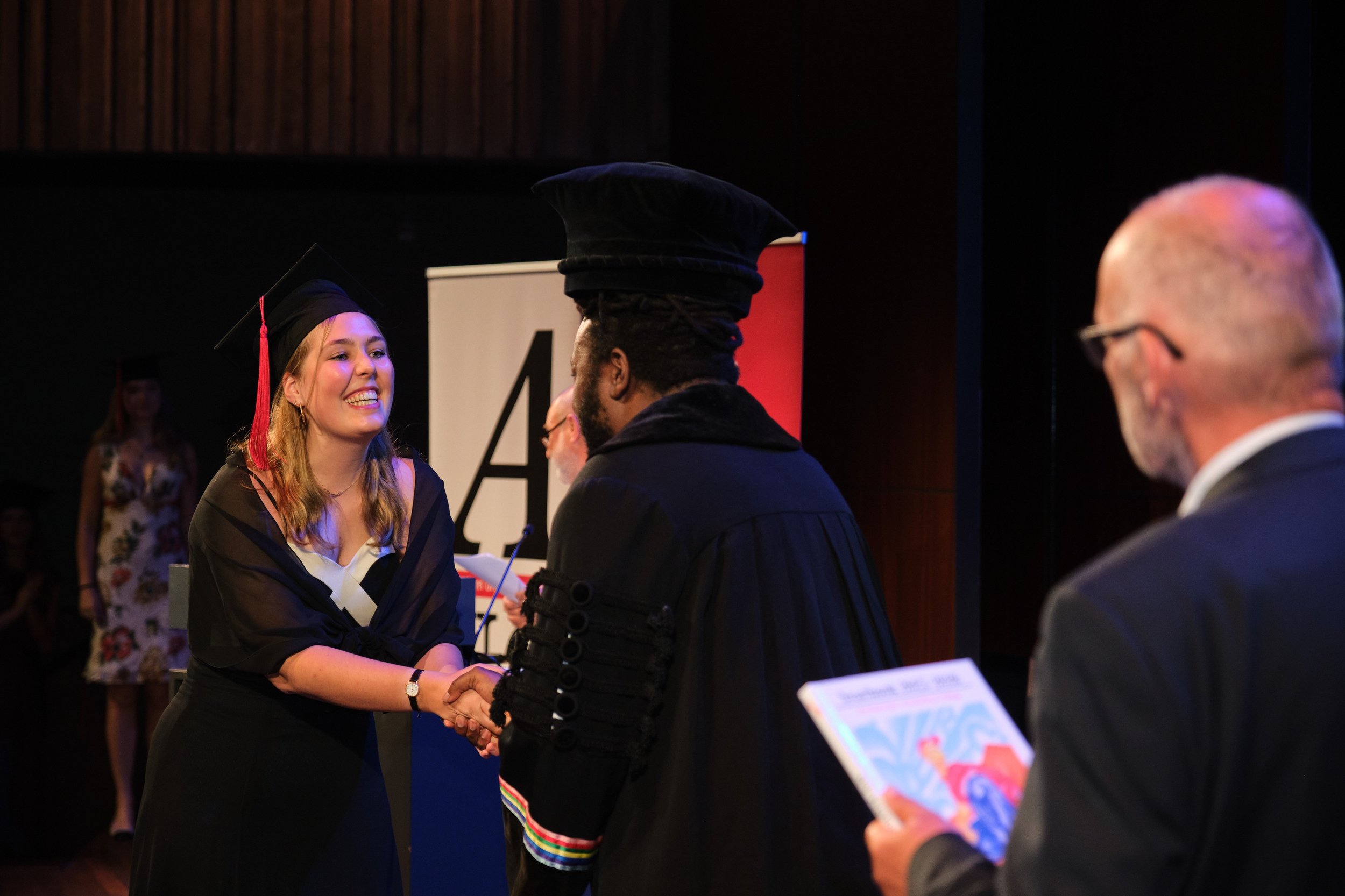
Valedictorian Willemijn Eijsink and interim Dean Bruce Mutsvairo during the Graduation Ceremony 2026.
From chemistry to robotic babies
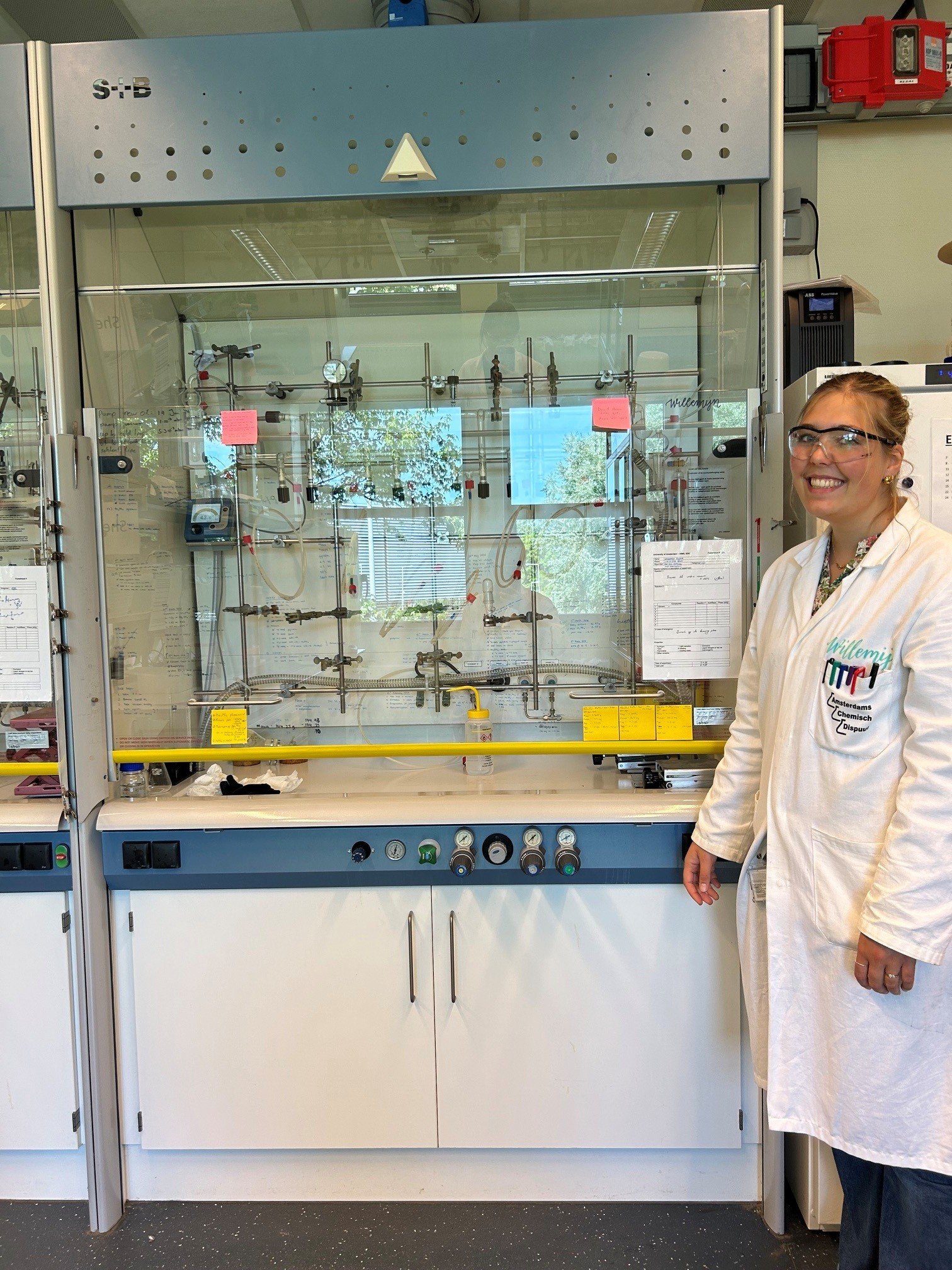
Willemijn started AUC combining chemistry and physics. “By the end of my first year I found out physics wasn’t really my thing, but I did really like chemistry, so I continued with that.” As is typical for AUC, she did not stop at one discipline, and made detours into music, artificial cognition, neuroscience and AI.
Her most creative project came from Big Questions in AI. The assignment was to design an AI product for ten years from now, and her group pitched robotic babies, fully dressed up in suits and ties for the occasion. “You could control their sleep schedule, or how fast they developed. It was just a lot of fun.”
Another course that stayed with her was Case Studies in Energy, Climate and Sustainability, which brought the social sciences and politics into the question of sustainability. One assignment was “position tracing”: students picked one of their own beliefs and traced where it came from, whether childhood, relationships or media. “Instead of arguing why it’s correct, you ask: how can I have this belief?”
A seat at the table
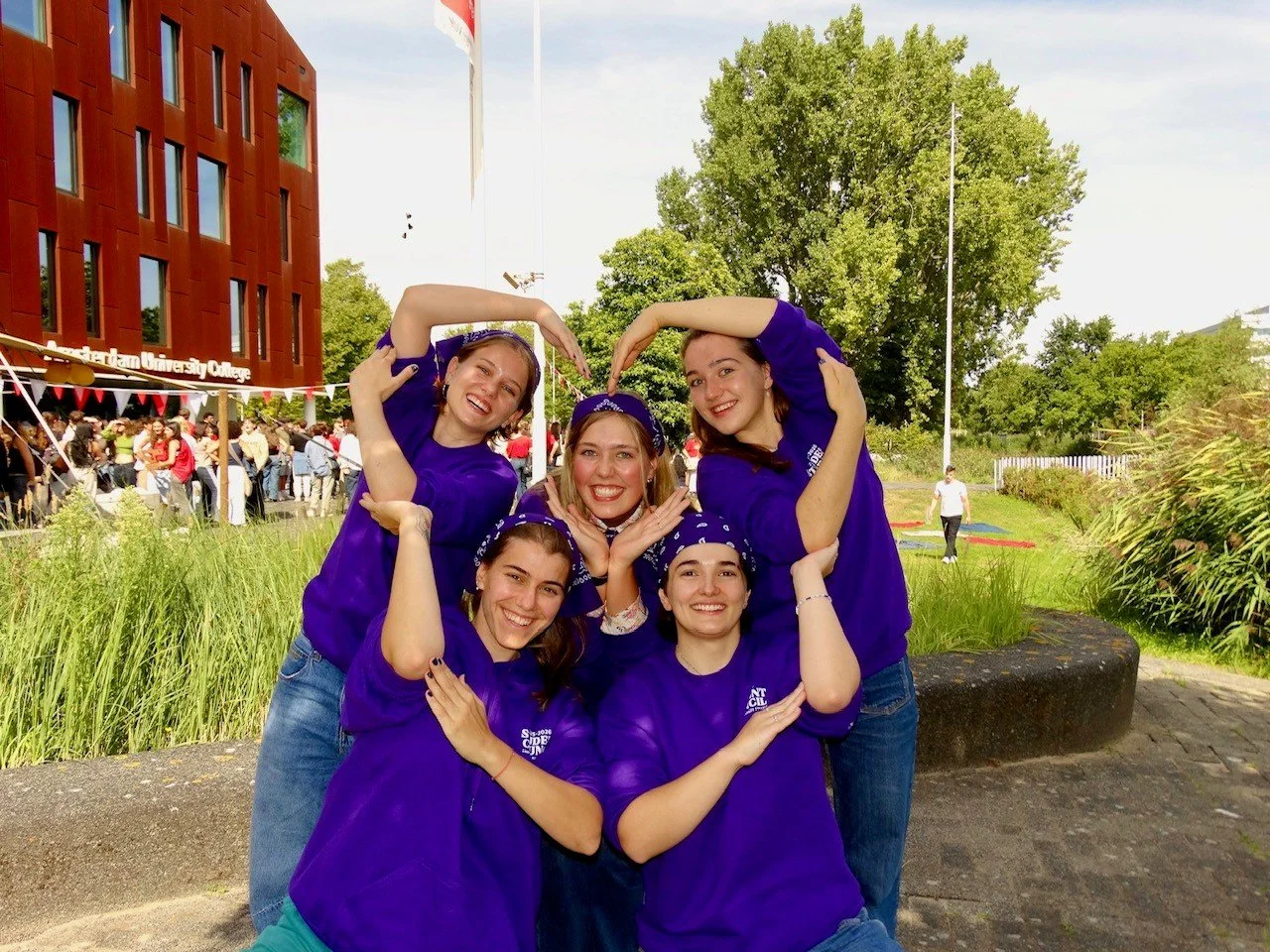
Willemijn’s route into the AUC Student Council (AUCSC) started early, in Peer Support in her first year, followed by the Board of Studies in her second. She saw the job of chair for the AUCSC as a supportive one: “My job was to support the other members, and to make sure there was a strong sense of cohesion and community among the five of us.” It was often invisible work. “Even when you feel like screaming from the rooftops that this is an important issue, that might not land.”
Her role leaned towards the staff side, as the main contact for the Dean and other staff members. “It’s interesting to get a seat at the table with people you really look up to, people who might have been your lecturers, or who grade you in another context. You have an equal voice, but also the responsibility of speaking for all the students you represent.”
She names two projects she is proudest of. The first is the new Social Code of Conduct, a process inherited from earlier councils after the 2023–24 protests for Palestine. Because most of the current student body had not been there for the protests, the council also had to explain why the changes were needed. The second is the Future Scenarios Taskforce, which looked at possible future directions the institution of AUC could take. Willemijn sat on the Strategic Advisory Group alongside heads of studies and senior staff. “I struggled to feel like I belonged there for the first week. Then I thought: I’m the only student on this panel, so I need to provide that student perspective.”
“Poetry is not a luxury”
Her Valedictorian speech drew on American author and activist Audre Lorde, whose work she first met in a Global Identity Experience class in January of her first year. “It was a heavily science-dominated class, but you couldn’t tell from our discussions.” What stayed with her most was the essay “Poetry Is Not a Luxury” from Sister Outsider (1984), in which poetry is not just a literary form but “a way of taking what you perceive in the world and turning that into something communicable.”
In her speech, she applied that idea to academia as a whole. “We can push for progress by taking abstract concepts and translating them into something we can share, because that way we can build on them and debate them. We all have that skill, and AUC teaches it. It’s not about writing actual poetry. It’s about taking input and building bridges with our words.”
Standing up and extending a hand
Willemijn also read from a Palestinian poem and spoke about Gaza. “We are a privileged community, and I wanted to recognize that others are not so lucky. But the spirit of protest was also very much alive in our cohort. We were the last cohort to experience the protests of 2023–24, and I knew it had to be addressed to give us some closure.”
She is proud of what her cohort stood for, but says it hurt to see the protests read by others as radical, out of touch, or even antisemitic, “which is a very hefty accusation that we did not recognize.” That perception, she says, left its mark on the rest of their time at AUC. “We sometimes had to show that we weren’t just a group of spoiled radicals.” She chose the hopeful part of the poem on purpose: “These movements require hope to be sustained. In standing up for it, you join a long line of people who stood up for something they believe in.”
How do you look back on your role in all of this?
“Part of my role in the student council was creating room for people to protest and show solidarity, while remaining accessible to management for advice, discussion and negotiation. Being that connecting bridge was very rewarding.”
What steps will you take now that you’ve graduated from AUC?
“After three very fun but very intense years, I’m using this time to rest, and also to figure out whether a career in research is what I really want, or whether I’m better off taking the skills I built in the council, like strategic and policy work, elsewhere. As much as I studied chemistry, I remain committed to it, especially the sustainability side. I’m trying to work that out by trying different roles and internships.”
“But the main reason I embarked on this year is that now is the time to do something that is not academia and not work. I really want to help people in some way. I’ve always wanted to work with kids, or be part of something bigger than me.”
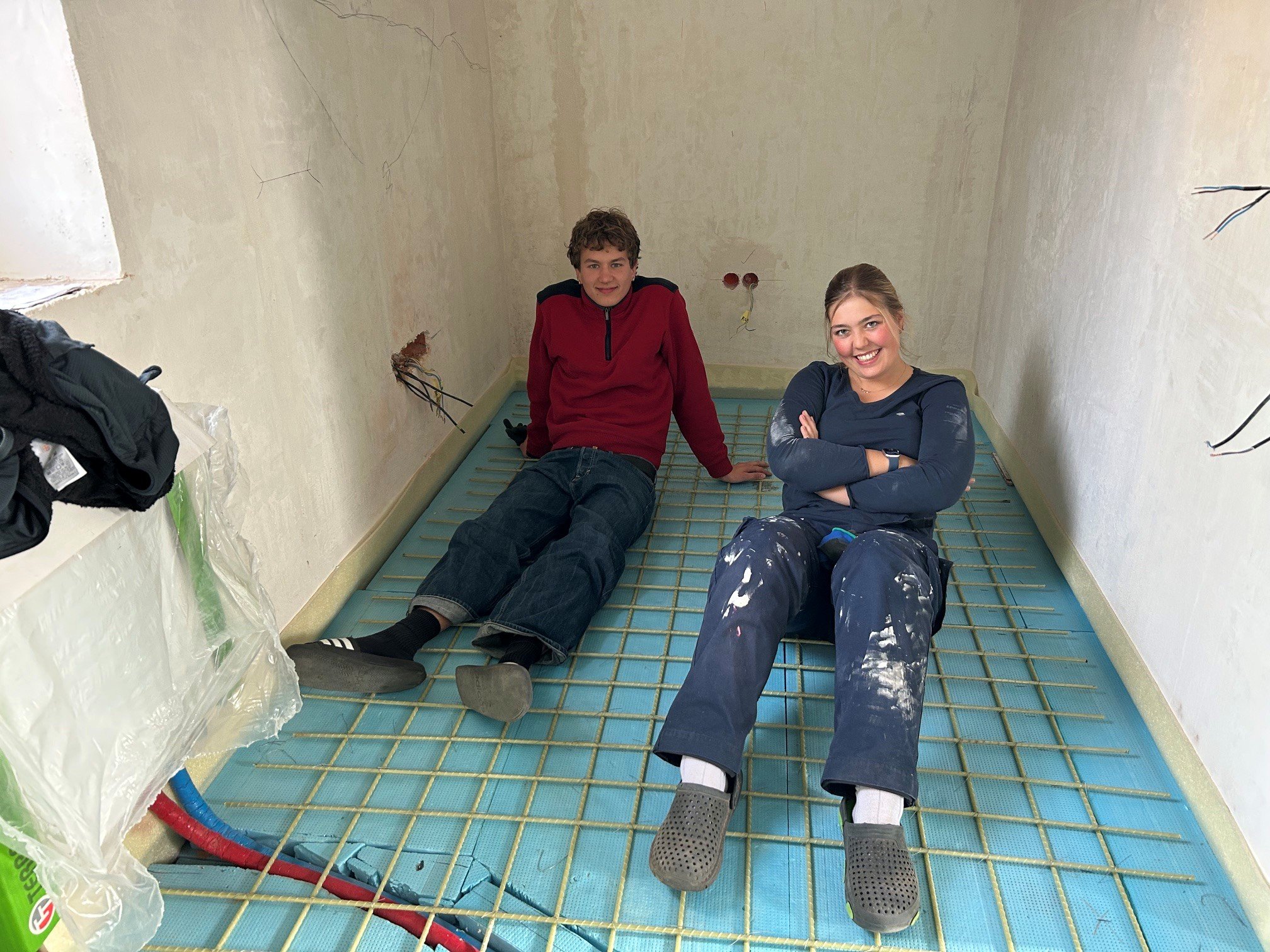
Her first step is a volunteer camp in a Ukrainian village in Chernihiv Oblast that was largely flattened during the occupation in 2022. The aim is to provide families who suffered the most loss with homes in time for winter. “I’m not someone who sits still,” she laughs. “I’m not very good at simply resting. I think that speaks to a lot of AUC students in general.”
As for what AUC gave her: “More than anything, a sense of awe at all the possibilities out there. You meet phenomenal people and they shape your path.” Her UvA internship in synthetic organic chemistry makes her think a master’s in the field is possible, but the humanities majors she met in her third year also pushed her to look beyond chemistry, “and apply valuable research skills in a different context.”
What advice do you have for the Class of 2026?
“You do have the power to exert influence and stand up for what you believe in, and I encourage you to. Use the skills AUC taught us: translating complicated ideas, holding nuanced perspectives, building bridges with people who don’t agree with us. But we also have our whole lives to do it. We’re young and idealistic, but let’s not be in a rush. Take time to recharge and come back to the cause when you’re ready.”
For future graduates, her message is simple: talk to the Student Council. “They so badly want to hear from you, and it can be discouraging not to receive that input.” She also points to the informal learning in the dorms. “A lot of the powerful impact comes from smaller conversations. Try not to get stuck on the details of why you disagree. You can always find each other in something.”
She has a message for staff too: “Cohorts change. Sometimes there were tensions or grudges that were not warranted, because they concerned students who had already graduated. I hope we can all turn the page and have a fresh start. Students are waiting to be shown, with gentle guidance.”
She closes with a shout-out to Peer Support, where her own journey began: “It isn’t inherently policy or advocacy, but that group goes a little underappreciated. I see a lot of cool projects they’re working on to build community, and that is instrumental to turning the page.”