
Betting on humans in an AI-shaped world: Anouk Manassen (Class of ‘15) on what actually matters in today's job market
Anouk Manassen graduated from AUC in 2015 with a degree in Anthropology, Sociology and History. She is now Global Director for Program Delivery at Generation – a nonprofit working to connect people to life-changing careers across 17 countries – and recently joined AUC’s International Advisory Board as the alumni representative. In this interview she reflects on how AI is changing the world of work, what professional paths bring surprising opportunities, and how AUC graduates can stand out. “Young people today are digitally literate. We need to learn from them, not just prepare them.”
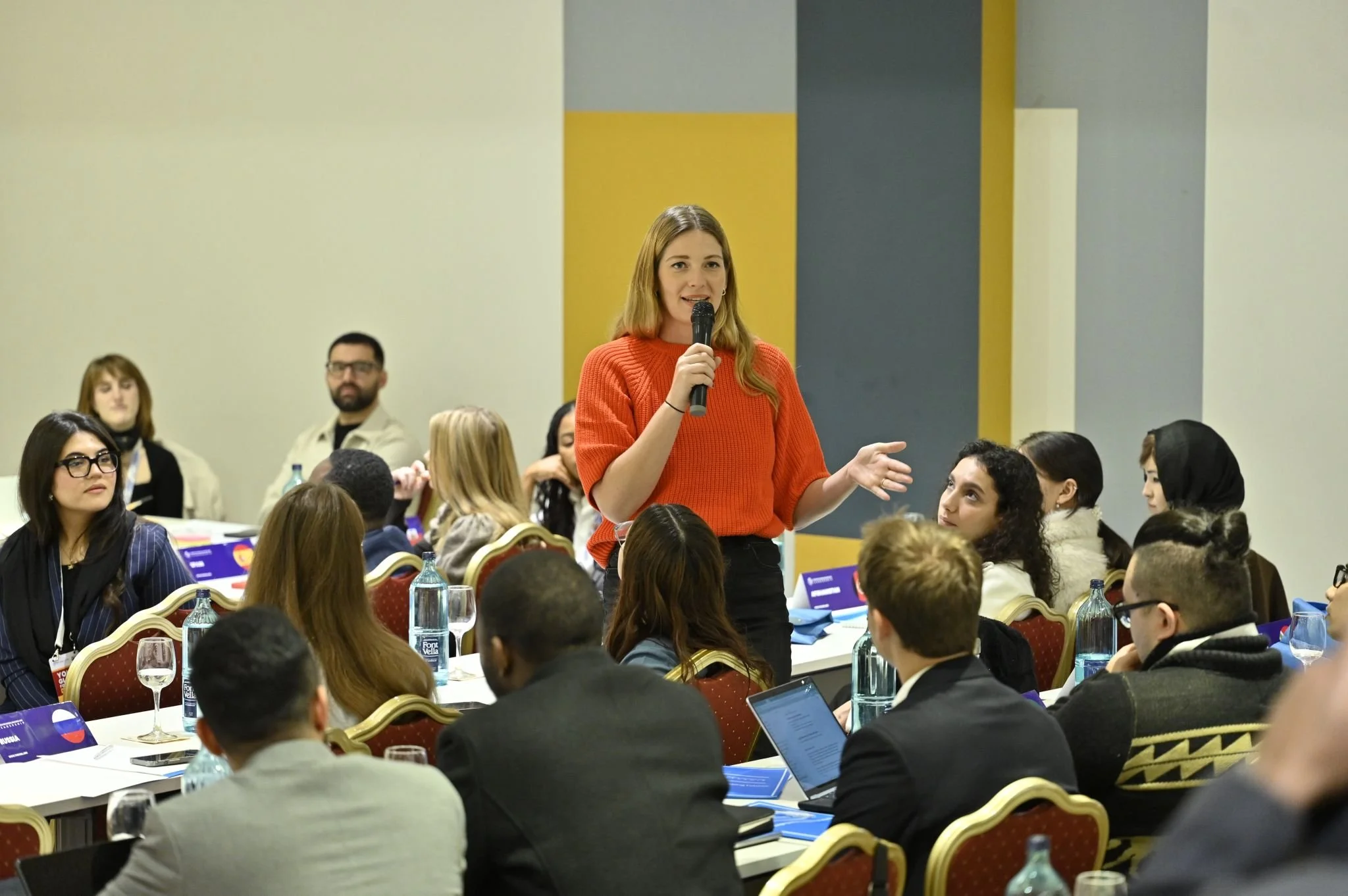
Before Anouk ended up in Madrid working for Generation, a nonprofit supporting people into life-changing careers, she passed through Montreal, Amsterdam, Utrecht, and The Hague. After AUC she pursued a Research Master in Migration, Ethnic Relations and Multiculturalism at Utrecht University, which led to a role at the International Organization for Migration – working on integrating Syrian refugees into the Dutch labour market. It was there that employment became more than a research topic. “Seeing the direct, tangible impact on people’s lives: that’s where my passion for this work truly took root.” Then came what she laughingly calls “a plot twist” – love – that brought her to Spain in 2018. She joined Generation as Learner Recruitment Manager and has grown into her current role from there: Global Director for Program Delivery, overseeing programs spanning 28 professions in 17 countries. She recently joined AUC’s International Advisory Board as the alumni representative, a body that brings together professionals from across the world to advise the college on its strategic direction and its connection to the broader professional landscape.
“As an operations leader, I think a lot about AI's upside – how we can harness it to improve our programs, reduce costs as an organization, and ultimately reach more people,” she shares. “But I'm equally focused on the other side of that question: how is AI reshaping the very professions we train and place our learners into? Which roles are becoming more resilient, and which are at risk? It's a challenge with enormous stakes for the people we serve, and it's something I think about every day.”
You recently joined AUC’s International Advisory Board as an alumni member – could you share more about the role? What do you hope to contribute?
“Those questions about the future of work and AI resilience are actually a big part of what drew me to the Board, alongside a genuine love for AUC and the lasting mark it left on me.”
What she wants to bring, she says, is a grounded perspective on what skills actually hold up in practice. And here, she returns to something she sees AUC doing genuinely well: “One thing that has always distinguished AUC – and I see this bearing out in the real world – is its commitment to holistic learning. Not just academic knowledge, but critical thinking, communication, empathy, and adaptability. Especially adaptability, which I'd sharpen even further: speed of adaptation, which I think is one of the defining capabilities of this moment. The world is changing fast, and I want to help ensure AUC continues to do right by its students, in the same way I try to do right by our learners at Generation.”
From where you sit now, what does the current landscape look like for young people entering or navigating the international job market?
“It looks genuinely different from when I entered it – and that doesn't feel like that long ago to me. But I approach it with optimism.”
“Yes, AI is displacing entry-level tasks. But young people can also use AI to accelerate their own development and hit the ground running in ways previous generations simply couldn’t. That's a real advantage if you lean into it.” She also pushes back against the assumption that stability lives only in traditional white-collar paths. “I think there are significant opportunities emerging in sectors that are making a comeback – more hands-on – that are proving both impactful and more resilient to automation. We’ve long equated success with a narrow set of professional paths, and I think this moment is actually an invitation to rethink that. Equal, sometimes greater, fulfillment and stability can be found elsewhere.”
On the generation itself, she is unambiguous: “Young people today are digitally literate, they're adaptable, confident in their skills, and they understand the tools shaping the world around them. We need to learn from them, not just prepare them.” Anouk elaborates: “That's why I think the real opportunity here is intergenerational partnership. It's historically not always easy – different generations bring different assumptions, different rhythms – but it's an exciting one. In my work I think about this constantly: how do we create the conditions for people across generations to learn from each other and build on what the other brings?”
What do you think actually distinguishes AUC graduates in that landscape — and is there anything you wish the college prepared students better for?
“AUC graduates are genuinely well-rounded people. They come out with a real understanding of how the world works and a strong sense of what they can contribute to it.” That self-awareness and intellectual confidence, she says, is a real differentiator. The adaptability piece is central – and specifically what she calls speed of adaptation, which AUC does cultivate alongside empathy, critical thinking, and communication.
That said, she doesn't shy away from naming a gap. AUC is “a wonderfully safe space, which I genuinely see as one of its strengths”. But Anouk sometimes wonders whether it could push students further situationally. She points to institutions experimenting with crisis simulations as building a different kind of muscle: “Preparation creates space for agility, adaptability beats perfection, and urgency reveals leadership. These are the kinds of muscles I'd love to see AUC help students build – because the world they're stepping into doesn't always give you time to think.”
What’s one piece of advice you'd give to an AUC alum figuring out what comes next?
“Trust your capabilities – and be okay with failure. Welcome changing your mind, pivoting, and discovering that what you thought you wanted isn't actually what you want. AUC does teach this, but honestly, the greatest lessons come from the moments when things don't work out. That can be a hard thing to internalize, especially coming out of an academic environment where success is measured in grades and exams and failure is framed as something to avoid. The real world works differently.”
She speaks from experience. Moving to Spain at a time when youth unemployment was “staggeringly high” was, by any measure, a risk – one that led to a career that genuinely fulfills her. “My biggest growth has always come from my most challenging moments. And some of my best decisions have been the riskiest ones.”
“Trust your instincts, take the leap, stay optimistic, and don't be afraid to fail,” Anouk concludes. “That's not a consolation prize, that's where real growth lives.”